Adult Educational Programs
Qibla
Certification in Islamic Studies
About Qibla
Navigate Your Life with Sacred Knowledge
The word Qibla means direction. The Qibla Certification in Islamic Studies is designed to give busy adults a clear direction toward Hidayah (guidance).This part-time program enriches your understanding of Islam, equipping you with the essential knowledge and practical tools to live purposefully. Balance your career with your faith, and gain the confidence to contribute meaningfully to your community, wherever life takes you.Program Overview
The Islamic Studies Certification Program is a comprehensive course of study designed to provide students with a strong foundation in the core Islamic sciences. The program currently consists of 11 courses, and students may choose to complete the entire curriculum within one year or enroll in as many courses as their schedule permits.
Flexible Learning Format
To accommodate students with varying commitments, courses are offered in a flexible format. Classes are held in person and streamed live online, with all sessions recorded and made available for later viewing, allowing students to learn at their own pace and stay engaged even when unable to attend live.
Schedule
Classes are held on Monday and Wednesday evenings at the ISB Campus. Detailed class schedules and timings can be found on the Courses page.
Classes Offered
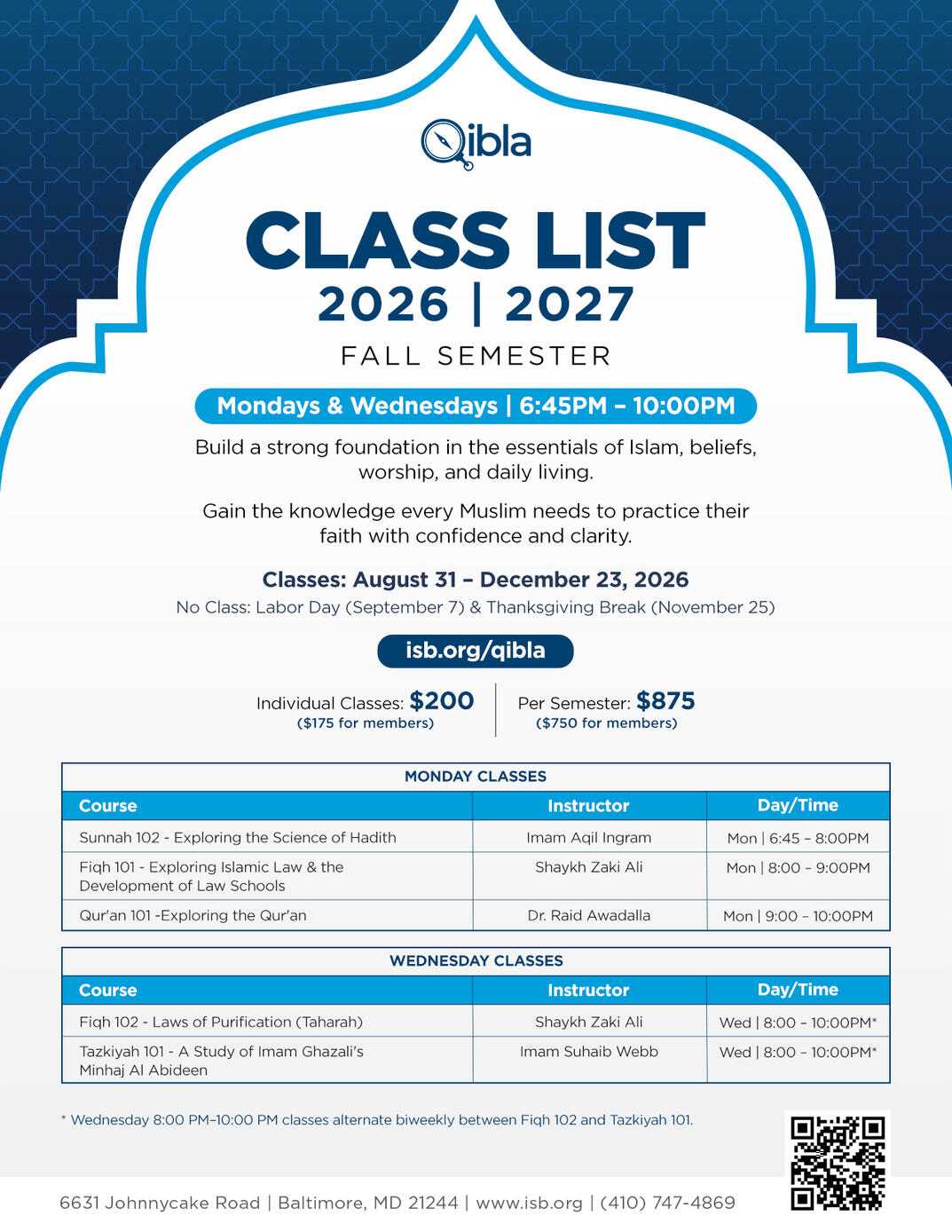
Spring semester schedule coming soon!
Quran 101:Quran 101 provides an analysis of the history of the Quran, Wahy (divine revelation), compilation, arrangement of chapters, coherence, causes of revelation, modes of Tafseer (exegesis), Mufassirreen (Exegetes), and Tafaaseer (Classical commentaries), coherence, inimitability, and principles of Tafseer.Quran 102:This course offers a detailed study of selected themes from a few chapters of the Quran that provide sufficient guidance on human relations and social interactions. It provides guidelines and boundaries to preserve the moral character of the individual and society.
Fiqh/Islamic Jurisprudence
Fiqh 101: Introduction to Islamic Law and the development of Madhaahib and Legal SchoolsFiqh 101 provides a comprehensive introduction to Islamic law (Sharia). This includes jurisprudence in the era of the Prophet Alayhis Salaam, the Companions, the successors, and the first few centuries. It will also examine the emergence and development of the major schools of Jurisprudence, including the Hanafi, Maliki, Shafi'i, and Hanbali schools, and the reasons for their disagreements. Students will examine the socio-political and cultural contexts that influenced the formation and evolution of these schools, as well as the key jurists and scholars who contributed to their doctrines.Fiqh 102: Fiqh of Purification: Foundations of Worship
Master the essentials of daily spiritual and physical cleanliness required for valid prayers. This course offers practical guidance on wudu, ghusl, tayammum, and the rules of wiping footgear for professionals on the go. You will also learn to confidently navigate the complex rulings surrounding menstruation to remove doubt from your worship.Fiqh 103: Fiqh of Prayer: Establishing ConnectionPerfect your daily worship by mastering the essential rulings, and precise timing for valid prayers. This course covers the dynamics of Athan, congregation and leading, practical concessions for the traveler's prayer, and the special rules for Jumu'ah (Friday) and Eidain (the two Eids). You will also explore different types of prayers and rulings on prostration of recitation and forgetfulness.Fiqh 104: Islamic Family Law (Fiqh of marriage and divorce)Nikah (marriage) is highly encouraged in Islam. In this course, we will dive into the jurisprudence of marriage, covering topics such as wali (guardianship), kafaa’ah (compatibility), Mahr (Islamic Dowry), Mahaarim (unmarriageable categories), conditions of a valid marriage; proposal, acceptance, witnesses, entitlements such as expenditures, nursing, etc.Talaq (divorce), though one of the detestable acts in the sight of Allah, has been permitted in Islam as an exit. Many in our communities lack the basic knowledge of Talaq in Islam. This part of the course will cover talaq and its forms, khula, faskh (annulment), ‘iddah (probation), ilaa’, and other rulings.Fiqh 105: Fiqh of Halal and HaramWe live in times of information overload. We are constantly confronting opinions, often conflicting, on matters of Halal and Haram related to everyday issues. In this course, we will take a closer look at the lawful and the unlawful on some of the following topics: Earning, Islam’s dress code and adornment, Islam’s dietary laws, food, entertainment, social interactions and relationships, social media, cultural practices, and holidays.
Sunnah 101: Introduction to Hadith & Sunnah: Foundations of Prophetic LegacyExplore the rich history, preservation, and divine authority of Prophetic traditions that shape Islamic practice. Learn how rigorous principles of compilation and transmission verified the integrity of the text and the reliability of narrators. Gain a deep appreciation for how these scholarly methods safeguard the Sunnah and illuminate the teachings of the Prophet.Sunnah 102: 40 Hadith of Imam NawawiThe Prophetic Sunnah (Hadith) is the second source of Islamic legislation, clarifying the teachings of the Holy Quran. As Allah Almighty states, it is a revelation. To benefit from the Prophetic guidance, a methodical approach is employed, starting with embedding the hadith meanings in beginners, leading to other more advanced approaches to the study of Hadith as a science.In this course, students will study the famous 40 Hadith of Imam Al-Nawawi due to its comprehensive coverage of the core foundations of the Islamic Faith.
Aqeedah: Foundations of Islamic Creed
Discover the core tenets of faith that define Sunni orthodoxy and establish the ultimate reality of our belief system. This course explores why we believe what we believe, providing a clear rational basis for our creed while safeguarding your intellect against deviant groups and conflicting beliefs. Anchor your heart in sound theological principles to confidently navigate modern ideological challenges.Tazkiyah 101: Purification of the Soul
Embark on a transformative journey of self-purification using Imam Al-Ghazali’s masterpiece, Minhaj al-Abideen (The Path of the Worshipers). This course focuses on navigating the spiritual hurdles and seven major obstacles outlined in the text to cultivate a sincere heart. Learn practical strategies to overcome worldly distractions, rectify your intentions, and establish a deeply meaningful connection with Allah.
Instructors
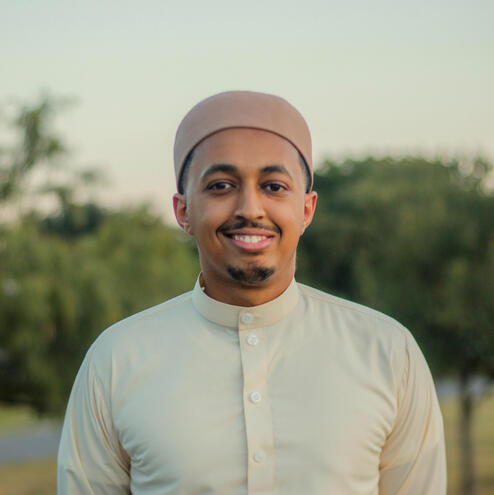
Sh. Zaki Ali serves in the role of Youth Director and Resident Scholar, bringing his unique experiences to the ISB community with big plans and Islamic knowledge.Sh. Zaki finished memorizing the Qur’an at the age of nine and has led Taraweeh prayers across the country for the past 13 years. He graduated from the University of Texas at Dallas with a Bachelor’s in Psychology and completed a Bachelor’s in Shariah from the Islamic University of Madinah. He also holds ijāzāt (certifications) in Qur’an and other Islamic sciences.
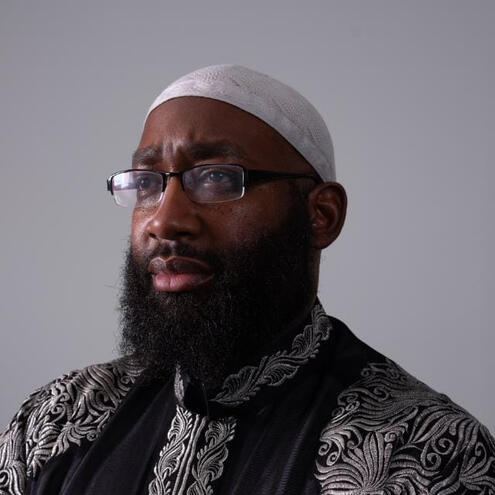
Imam Aqil Ingram has studied Judicial Law and Jurisprudence with the Islamic University of Madinah and Psychology with Thomas Edison State University. He is also the former Director of Language and Theology at the M&M Learning Center and a former Administrative Chaplain with the Department of Public Safety. His current roles include Imam and Resident Scholar with Islamic Society of Baltimore, President of Blackstone, and Dean of Aql Institute.
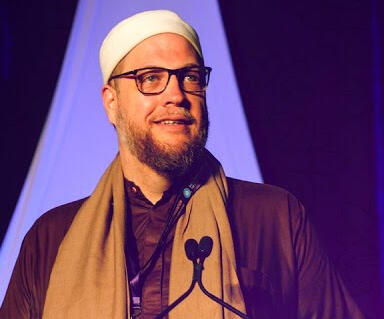
Born in Oklahoma in 1972, Imam Suhaib Webb embraced Islam at the age of 20, leaving a promising career in hip-hop to pursue Islamic scholarship.
He earned a B.A. in Islamic Law (Shari’ah) from Al-Azhar University and memorized the Quran in Makkah. He has served as Imam of the Islamic Society of Boston Cultural Center and Resident Scholar at the Islamic Center at New York University.
Today, he is the founder of Suhaib Webb Institute of Sacred Sciences, a global online platform dedicated to accessible, traditional Islamic education, and runs the Ella Collins Institute in Washington, DC.
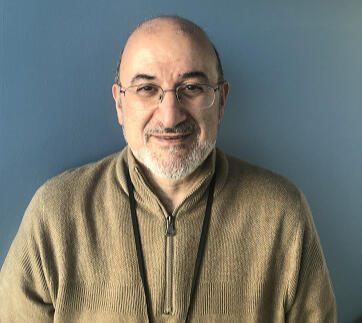
Dr. Ra’id Awadallah received his Ph.D. in Electrical Engineering from Virginia Tech in 1998. He joined Johns Hopkins University Applied Physics Laboratory in the same year and he is currently a member of the principal professional staff. Over the last 23 years, he has led a team of researchers developing efficient numerical models for tropospheric propagation, electromagnetic scattering from randomly rough surfaces, radar cross-section of complex targets, pulsed propagation in complex urban structures, and characterization of thin-film metamaterials. Dr Awadallah is also an adjunct professor at the Johns Hopkins University Engineering Program for professionals where he teaches courses on basic and applied electromagnetism.Prior and in parallel to his pursuit of the technical disciplines, Dr. Awadallah spent many years studying various Islamic disciplines such as Arabic Language, Tafseer, Fiqh and Hadeeth. He has been teaching these various Islamic disciplines, especially Arabic Language and Tafseer, at various masajid in the Baltimore area since 1998


Intensives
Qibla Institute is pleased to announce another weekend intensive, covering a special topic important to our faith and our beliefs. All community members are encouraged to register and attend.An intensive does not count towards the 2-year certification.Knowing Him - A Journey through the 99 Names of Allah (swt)You're invited to experience Allah's Names in a way that transforms the heart. Each Name reveals something about His mercy, His power, His love, and His closeness to you. Together, we will journey through the 99 Names of Allah (swt).Instructors:
- Imam Aqil Ingram and Sh. Zaki Ali
- Intensive dates: Friday, December 26 and Saturday, December 27
- Cost: $20 per person | $15 per student
Admissions Policy
In-Person Attendance Encouraged
Attendance
Students are strongly encouraged to attend classes in person whenever possible. There is immense barakah in the effort, commitment, and sacrifices made in the pursuit of sacred knowledge, and the in-person learning experience offers unique benefits that cannot be fully replicated online.Required textbooks will be provided for courses that utilize designated texts.
Recordings
For those who are unable to attend physically, a remote attendance option will be available. Online classes will be conducted through Google Classroom, and virtual students must have access to and be able to use the platform.Required textbooks will be provided for courses that utilize designated texts.
Testing
The teacher/instructor will check in with remote students periodically to ensure they are keeping up with the materials.There will be mandatory testing per semester. Certification will be based on final scores.
Communication
Contact information for the teachers will be made available for students to keep connected during the week.If, for any reason, a class is canceled, prior notice will be given to the students.
Tuition and Fees
Per Semester
$875
($750 for ISB members)
Monthly installments are also available during the checkout process.
Per Semester
$200
per semester - ($175 for ISB members)
ISB Members only - to qualify for the discounted price, please enter code "ISBMEMBER" in the coupon/promo field during checkout.Please note that tuition is non-refundable. Exceptional circumstances will be considered. This is to ensure that students are committed throughout the academic year.Financial aid will be made available for those students who cannot afford the tuition. For further details, please inquire at [email protected].